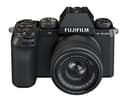
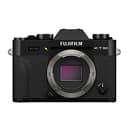
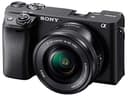
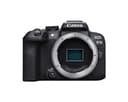
A hybrid camera has a harder job than a vlogging camera or a video-first body: it has to be genuinely good at both stills and video, because you’re buying one camera to do the work of two. That’s the camera most people actually want — one body that shoots the family portraits, the travel photos and the weekend YouTube video, without a compromise you notice every time you pick it up.
So we judge these on a specific list. For stills, that means a real viewfinder you can use in bright sun, enough resolution to crop, and an autofocus system that locks onto an eye and stays there. For video, it means clean, sharp 4K, a screen that flips forward, and reliable focus while you move. And for the shots where the two overlap — handheld video, low light, a moving subject — in-body stabilization (IBIS) and a lens system worth growing into are what separate a true hybrid from a camera that’s merely fine at each.
Below we split the picks by who you are: the APS-C body most creators should buy, the full-frame options for when the work gets paid, a stills-leaning pick for photographers who dabble in video, and the value choice that does almost all of it for a lot less. Every pick shows a live Amazon price and a buy button, so you can act on the recommendation without hunting for it. We haven’t physically tested these bodies — we say so, and we explain exactly what we do instead on our methodology page.
How to choose a hybrid camera
Start with format. APS-C is the sweet spot for a hybrid: the sensor is large enough for lovely photos and clean 4K, but the bodies and lenses stay smaller, lighter and far cheaper than full-frame. Most people reading this should buy an APS-C body like the Fujifilm X-S20 or Sony a6400 and spend the savings on glass. Full-frame— the Sony a7 IV and Canon R6 Mark II here — gathers a little more light and gives shallower background blur, but it’s a deliberate upgrade for paid work, not a default.
Then weigh the four things that actually change how a hybrid feels to use. A viewfindermatters the moment you shoot stills outdoors, where a rear screen washes out — every pick here has one, and it’s the single feature vlogging-first cameras drop that photographers miss most. In-body stabilization is what makes handheld video watchable and lets you shoot stills at slower shutter speeds in dim light; the X-S20, a7 IV and R6 Mark II have it, while the cheaper bodies rely on stabilized lenses instead. Autofocusis the difference between keepers and near-misses on a moving subject — Sony and Canon both have excellent eye tracking, and Sony’s AI subject recognition on the step-up a6700 (featured in our cameras for YouTube guide) is the pick if fast, hands-off focus is your priority. Finally, the lens system: the body you buy commits you to a mount, so it’s worth checking that the glass you’ll want later exists and is affordable before you decide.
One thing that isn’t on the list: megapixels. Beyond roughly 24 to 33 million, more resolution rarely helps a hybrid and can hurt low light. The lens changes your images far more than the body does, which is why a mid-range camera with one good fast prime usually beats an expensive body on its kit zoom — our portrait lens guide and video lens guidepick up where this one leaves off. And whatever body you land on, the biggest upgrade to your video won’t be the camera at all: it’s a proper microphone and a light, both of which cost far less than a new camera and make a bigger difference to how professional your footage looks. Still deciding between systems entirely? Start with our what camera should I buy guide.