Wide Open. Gear

The Best Mirrorless Cameras for Beginners

Approachable interchangeable-lens cameras with autofocus you can trust and guided menus that teach as you shoot.

By Stephen V.Last updated How we pick

The best beginner camera isn’t the one with the most impressive spec sheet — it’s the one that gets out of your way while you learn. For a beginner, that means two things above all: autofocus you can trust, so your shots are actually sharp, and controls that make sense, so you spend your time shooting instead of digging through menus. Sensor size and resolution matter far less than the marketing suggests; every camera here takes lovely photos.

All of these are APS-C mirrorless bodies — the sweet spot of quality, size and price for someone starting out. They give you a real, large sensor and the ability to change lenses (the upgrade that will most improve your photos), without the cost and bulk of full-frame. We’ve ranked them by how forgiving and enjoyable they are to learn on, and flagged which suits photos, which suits video, and which does both.

How this is funded:we earn a commission if you buy through our links, at no extra cost to you. It never changes which product we recommend, and we’ll tell you plainly when to skip one. Full disclosure.

Quick picks

Ranked on published specs and buyer fit. Select a row to jump to the full write-up. We have not tested these products — here is exactly what we do instead.

#ProductBest forPrice
1
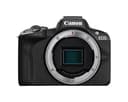
Canon EOS R50

Canon EOS R50

The friendliest beginner mirrorless camera going: Canon's excellent Dual Pixel autofocus, a genuinely helpful guided interface, and oversampled 4K30 in a body small enough to carry everywhere. It leans consumer — small grip, one slot — but it nails the thing beginners actually struggle with, which is focus.

Best overall for beginners
2
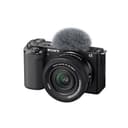
Sony ZV-E10

Sony ZV-E10

The interchangeable-lens vlogging camera most people should actually buy: a big APS-C sensor, a fully articulating screen, and Sony's E-mount so you can grow into better glass later. It skips a viewfinder and IBIS to hit its price, which is the right trade for a creator shooting off the screen.

Best for video
$898.00 · View on Amazon

Price as of July 28, 2026. #ad How we’re funded

3
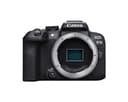
Canon EOS R10

Canon EOS R10

The enthusiast step above the R50: faster burst shooting, a deeper grip and a second control dial, plus the same trustworthy Dual Pixel autofocus. If you shoot action, sports or kids and want APS-C without going Sony, this is Canon's sweet spot.

Best for action
$1,099.00 · View on Amazon

Price as of July 28, 2026. #ad How we’re funded

4
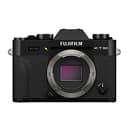
Fujifilm X-T30 II

Fujifilm X-T30 II

The camera to buy if the photos-should-look-like-film thing appeals to you. Fujifilm's color profiles are the real draw, and the dial-driven body is a joy for stills. It is more photographer's camera than vlogger's — the screen tilts but doesn't flip forward.

Best for photo lovers
$1,386.01 · View on Amazon

Price as of July 28, 2026. #ad How we’re funded

5
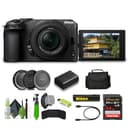
Nikon Z30

Nikon Z30

Nikon's vlogging-first crop body: no viewfinder, a fully articulating screen, and a comfortable grip that punches above its weight. A strong value if you are already in Nikon glass or want a content camera that still handles like a real camera in the hand.

Best grip and value

The picks in full

#1Best overall for beginners

Canon EOS R50

The friendliest beginner mirrorless camera going: Canon's excellent Dual Pixel autofocus, a genuinely helpful guided interface, and oversampled 4K30 in a body small enough to carry everywhere. It leans consumer — small grip, one slot — but it nails the thing beginners actually struggle with, which is focus.

Strengths

  • Dual Pixel autofocus is the easiest to trust at this price
  • Guided menu genuinely teaches as you shoot
  • Oversampled, uncropped 4K30

Trade-offs

  • Small grip and body feel toy-like with bigger lenses
  • No in-body stabilization; RF-S lens choice is still thin
SensorAPS-C CMOS, 24.2 MP
MountCanon RF
Video4K30 (oversampled, uncropped)
AutofocusDual Pixel CMOS AF II
Weight375 g with battery

Specifications read from the manufacturer listing, on July 18, 2026.

#2Best for video

Sony ZV-E10

The interchangeable-lens vlogging camera most people should actually buy: a big APS-C sensor, a fully articulating screen, and Sony's E-mount so you can grow into better glass later. It skips a viewfinder and IBIS to hit its price, which is the right trade for a creator shooting off the screen.

Strengths

  • APS-C sensor is a real low-light step up from any 1-inch compact
  • Fully articulating screen and creator-focused buttons
  • E-mount opens the door to the fast primes in our lens guides

Trade-offs

  • No viewfinder and no in-body stabilization
  • Rolling shutter shows up on fast pans
SensorAPS-C CMOS, 24.2 MP
MountSony E
Video4K30 (with crop), FHD up to 120p
StabilizationDigital only, no IBIS
Weight343 g with battery

Specifications read from the manufacturer listing, on July 18, 2026.

#3Best for action

Canon EOS R10

The enthusiast step above the R50: faster burst shooting, a deeper grip and a second control dial, plus the same trustworthy Dual Pixel autofocus. If you shoot action, sports or kids and want APS-C without going Sony, this is Canon's sweet spot.

Strengths

  • Fast mechanical and electronic burst shooting
  • Twin dials and a proper grip for one-handed control
  • Reliable subject tracking for moving targets

Trade-offs

  • 4K60 is cropped; no in-body stabilization
  • RF-S lens lineup is still limited
SensorAPS-C CMOS, 24.2 MP
MountCanon RF
Video4K30 (oversampled), 4K60 (cropped)
BurstUp to 15 fps mechanical, 23 fps electronic
Weight429 g with battery

Specifications read from the manufacturer listing, on July 18, 2026.

#4Best for photo lovers

Fujifilm X-T30 II

The camera to buy if the photos-should-look-like-film thing appeals to you. Fujifilm's color profiles are the real draw, and the dial-driven body is a joy for stills. It is more photographer's camera than vlogger's — the screen tilts but doesn't flip forward.

Strengths

  • Fujifilm film-simulation color is genuinely distinctive
  • Tactile shutter-speed and exposure dials
  • Excellent 26 MP sensor for the price

Trade-offs

  • Tilt screen doesn't face forward for vlogging
  • Small body and grip; modest battery life
SensorAPS-C X-Trans CMOS 4, 26.1 MP
MountFujifilm X
Video4K30 (DCI/UHD)
Viewfinder2.36M-dot EVF
Weight383 g with battery

Specifications read from the manufacturer listing, on July 18, 2026.

#5Best grip and value

Nikon Z30

Nikon's vlogging-first crop body: no viewfinder, a fully articulating screen, and a comfortable grip that punches above its weight. A strong value if you are already in Nikon glass or want a content camera that still handles like a real camera in the hand.

Strengths

  • Deep, comfortable grip unusual at this size
  • Fully articulating screen and a dedicated video record button
  • Good 20.9 MP sensor for stills and 4K

Trade-offs

  • No viewfinder and no in-body stabilization
  • 4K30 only; Z DX lens lineup is still small
SensorAPS-C (DX) CMOS, 20.9 MP
MountNikon Z
Video4K30, FHD120
ViewfinderNone (rear screen only)
Weight405 g with battery

Specifications read from the manufacturer listing, on July 18, 2026.

What actually matters when you’re starting out

Buy the body, then spend your next money on a lens, not a second body. A cheap fast prime like a 50mm f/1.8 will teach you more and improve your photos more than any spec upgrade — our portrait lens guide and the beginner kit guide explain exactly what to add and when.

Don’t agonize over brand. All five here are excellent, and the “best” one is mostly about which menu and grip feel right in your hands and which lenses you want down the line. If you’re still deciding between systems entirely, start with our what camera should I buy guide.

Frequently asked questions

Is APS-C good enough, or do I need full-frame?

APS-C is more than good enough for beginners and most enthusiasts. Full-frame gathers a little more light and gives shallower background blur, but it costs far more, in bigger and pricier lenses too. Start on APS-C; you may never feel the need to move up.

Mirrorless or DSLR for a beginner?

Mirrorless, for a new buyer. Every camera company has moved its development to mirrorless, so that's where the new lenses and features are. A used DSLR can still be a bargain, but you're buying into a system that's winding down. See our mirrorless vs DSLR guide.

Which of these is best for video?

The Sony ZV-E10 is the most video-focused, with a fully articulating screen and creator features. The Canon R10 shoots strong 4K and is great for action, and the Canon R50 is a superb all-rounder. The Fujifilm leans toward stills.

Do I need to buy extra lenses right away?

No. Start with the kit lens that comes with the camera, learn on it, and add a fast prime lens once you know what you like to shoot. That order saves money and teaches you more.

How much should a beginner spend?

You can get a genuinely capable mirrorless kit for a mid-three-figure price. Spend what's comfortable on the body, keep budget aside for one good lens and a memory card, and don't feel you need the priciest option to take great photos.

Sources

Keep reading