Wide Open. Gear

The Best Vlogging Cameras

The cameras built for talking to the lens — flip screens, wide framing and clean audio — from pocket compacts to interchangeable-lens bodies.

By Stephen V.Last updated How we pick

A vlogging camera has a specific job, and it’s not “highest image quality.” It’s letting you film yourself: a screen that flips forward so you can see the shot, a lens wide enough to fit your face in an arm’s-length frame, autofocus that stays locked on you, and audio that doesn’t sound like a tin can. Judge cameras on those four things and the field narrows fast.

Below we split the picks by how you actually vlog. If you want one thing that works out of the box with no lens or mic to buy, a compact like the Sony ZV-1 II is the easy answer. If you want room to grow into better glass and low light, an interchangeable-lens body like the ZV-E10 is the smarter long-term buy. And if your vlog is a walk-and-talk, the Osmo Pocket 3’s built-in gimbal does something no mirrorless camera can match handheld.

How this is funded:we earn a commission if you buy through our links, at no extra cost to you. It never changes which product we recommend, and we’ll tell you plainly when to skip one. Full disclosure.

Quick picks

Ranked on published specs and buyer fit. Select a row to jump to the full write-up. We have not tested these products — here is exactly what we do instead.

#ProductBest forPrice
1
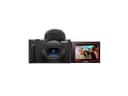
Sony ZV-1 II

Sony ZV-1 II

The most grab-and-go vlogging camera here: a wide 18-50mm equivalent zoom, a flip-out screen, and the best-in-class directional mic mean you can walk out the door and shoot talking-head video with no lens or mic to buy. The catch is the 1-inch sensor and no in-body stabilization.

Best overall
$948.00 · View on Amazon

$1,049.9910% off

Price as of July 28, 2026. #ad How we’re funded

2
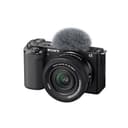
Sony ZV-E10

Sony ZV-E10

The interchangeable-lens vlogging camera most people should actually buy: a big APS-C sensor, a fully articulating screen, and Sony's E-mount so you can grow into better glass later. It skips a viewfinder and IBIS to hit its price, which is the right trade for a creator shooting off the screen.

Best for growing into
$898.00 · View on Amazon

Price as of July 28, 2026. #ad How we’re funded

3
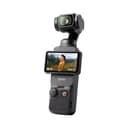
DJI Osmo Pocket 3

DJI Osmo Pocket 3

Not a traditional camera at all — a pocket gimbal with a 1-inch sensor bolted on — and that is exactly why it is the best walk-and-talk vlogging tool here. The 3-axis gimbal gives you glass-smooth motion no mirrorless body can match handheld, in something the size of a chunky pen.

Best for walk-and-talk
$438.00 · View on Amazon

$499.0012% off

Price as of July 28, 2026. #ad How we’re funded

4
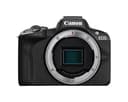
Canon EOS R50

Canon EOS R50

The friendliest beginner mirrorless camera going: Canon's excellent Dual Pixel autofocus, a genuinely helpful guided interface, and oversampled 4K30 in a body small enough to carry everywhere. It leans consumer — small grip, one slot — but it nails the thing beginners actually struggle with, which is focus.

Best for photos too
5
Panasonic LUMIX G100

Panasonic LUMIX G100

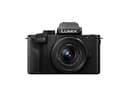
The budget vlogging camera with the cleverest party trick: built-in directional audio that follows your face, so you can often skip an external mic entirely. The Micro Four Thirds sensor is smaller than APS-C, but for well-lit talking-to-camera it is a tidy, complete little package.

Best on a budget

The picks in full

#1Best overall

Sony ZV-1 II

The most grab-and-go vlogging camera here: a wide 18-50mm equivalent zoom, a flip-out screen, and the best-in-class directional mic mean you can walk out the door and shoot talking-head video with no lens or mic to buy. The catch is the 1-inch sensor and no in-body stabilization.

Strengths

  • Wider 18-50mm equivalent lens fits your face in an arm's-length selfie shot
  • Built-in directional 3-capsule mic and included windscreen are genuinely usable
  • Product-showcase and background-blur buttons are made for talking-to-camera

Trade-offs

  • 1-inch sensor trails APS-C rivals in low light
  • No in-body stabilization, so walking footage needs the digital crop
Sensor1-inch stacked CMOS, 20.1 MP
LensFixed 18-50mm equivalent f/1.8-4 zoom
Video4K30, FHD up to 120p
StabilizationDigital (Active) only, no IBIS
Weight292 g with battery

Specifications read from the manufacturer listing, on July 18, 2026.

#2Best for growing into

Sony ZV-E10

The interchangeable-lens vlogging camera most people should actually buy: a big APS-C sensor, a fully articulating screen, and Sony's E-mount so you can grow into better glass later. It skips a viewfinder and IBIS to hit its price, which is the right trade for a creator shooting off the screen.

Strengths

  • APS-C sensor is a real low-light step up from any 1-inch compact
  • Fully articulating screen and creator-focused buttons
  • E-mount opens the door to the fast primes in our lens guides

Trade-offs

  • No viewfinder and no in-body stabilization
  • Rolling shutter shows up on fast pans
SensorAPS-C CMOS, 24.2 MP
MountSony E
Video4K30 (with crop), FHD up to 120p
StabilizationDigital only, no IBIS
Weight343 g with battery

Specifications read from the manufacturer listing, on July 18, 2026.

#3Best for walk-and-talk

DJI Osmo Pocket 3

Not a traditional camera at all — a pocket gimbal with a 1-inch sensor bolted on — and that is exactly why it is the best walk-and-talk vlogging tool here. The 3-axis gimbal gives you glass-smooth motion no mirrorless body can match handheld, in something the size of a chunky pen.

Strengths

  • Mechanical 3-axis gimbal — smoother than any in-body system
  • Large 1-inch sensor for a pocket device; 4K120 slow-mo
  • Face tracking spins the camera to keep you centered

Trade-offs

  • Fixed lens and a tiny screen
  • Short battery life; wind noise needs the add-on mic or windscreen
Sensor1-inch CMOS
Stabilization3-axis mechanical gimbal
Video4K120, up to 4K60 normal
Form factorPocket handheld gimbal camera
Weight179 g

Specifications read from the manufacturer listing, on July 18, 2026.

#4Best for photos too

Canon EOS R50

The friendliest beginner mirrorless camera going: Canon's excellent Dual Pixel autofocus, a genuinely helpful guided interface, and oversampled 4K30 in a body small enough to carry everywhere. It leans consumer — small grip, one slot — but it nails the thing beginners actually struggle with, which is focus.

Strengths

  • Dual Pixel autofocus is the easiest to trust at this price
  • Guided menu genuinely teaches as you shoot
  • Oversampled, uncropped 4K30

Trade-offs

  • Small grip and body feel toy-like with bigger lenses
  • No in-body stabilization; RF-S lens choice is still thin
SensorAPS-C CMOS, 24.2 MP
MountCanon RF
Video4K30 (oversampled, uncropped)
AutofocusDual Pixel CMOS AF II
Weight375 g with battery

Specifications read from the manufacturer listing, on July 18, 2026.

#5Best on a budget

Panasonic LUMIX G100

The budget vlogging camera with the cleverest party trick: built-in directional audio that follows your face, so you can often skip an external mic entirely. The Micro Four Thirds sensor is smaller than APS-C, but for well-lit talking-to-camera it is a tidy, complete little package.

Strengths

  • Built-in directional audio that tracks your face
  • Fully articulating screen and a small, light body
  • Includes a viewfinder — rare at this price

Trade-offs

  • Smaller Micro Four Thirds sensor struggles more in low light
  • 4K is cropped and time-limited; no in-body stabilization for video
SensorMicro Four Thirds CMOS, 20.3 MP
MountMicro Four Thirds
Video4K30 (cropped, time-limited)
AudioBuilt-in OZO Audio directional mic
Weight352 g with battery

Specifications read from the manufacturer listing, on July 18, 2026.

How to choose a vlogging camera

Start with where you film. Sitting at a desk in good light? Almost any of these works, and you can prioritize autofocus and audio. Filming outdoors and on the move? Prioritize stabilization — either a gimbal camera like the Osmo Pocket 3, or a body you’ll pair with a small gimbal.

The biggest upgrade for most vloggers isn’t the camera at all — it’s a microphone. See our best microphones for YouTube for on-camera and wireless options that transform how professional your videos sound. A ring light or key light from our lighting guides is the next-best spend.

Frequently asked questions

Do I need a flip screen to vlog?

Practically, yes. Being able to see yourself while you film is what keeps you framed and in focus. Every camera in this guide either has a screen that flips fully forward or, in the Osmo Pocket 3's case, a screen you view directly while it films you.

Is a 1-inch sensor good enough for vlogging?

For well-lit vlogging, yes — the Sony ZV-1 II and Osmo Pocket 3 both use 1-inch sensors and look great in daylight. If you often film in dim rooms or after dark, an APS-C body like the ZV-E10 will hold up better because its larger sensor gathers more light.

Do I need in-body stabilization for vlogging?

It helps for walking shots, but it isn't essential if you shoot seated or on a tripod. None of the mirrorless picks here have in-body stabilization at this price; if smooth walking footage is your priority, the gimbal-based Osmo Pocket 3 is the standout.

Can I use these as a webcam?

Most can. Several output cleanly over USB, and any camera with clean HDMI can be turned into a webcam with a capture card — see our best capture cards guide.

What's the cheapest camera that's genuinely good for vlogging?

The Panasonic LUMIX G100 is the value pick here: it includes a viewfinder and a clever built-in directional mic that tracks your face, so you can often skip an external mic entirely.

Sources

Keep reading