Wide Open. Gear

The Best Lenses for Video

Fast, quiet-focusing glass that suits run-and-gun shooting — the zoom that does it all and the primes that look cinematic.

By Stephen V.Last updated How we pick

Video asks different things of a lens than photography does. Autofocus needs to be quiet, so the mic doesn’t pick up the motor. It needs to be smooth, so focus pulls don’t jump. And ideally the lens has minimal “focus breathing” — the distracting way the frame slightly zooms as focus shifts. A fast aperture still matters for the cinematic blurred-background look and for low light.

For most creators, the single best video lens is a constant-aperture zoom: it covers wide vlogging shots through to tighter framing without swapping lenses mid-shoot, which is exactly what run-and-gun work needs. If you want the most cinematic look and don’t mind changing lenses, a couple of fast primes deliver more blur for less money. We’ve picked both below, weighted toward Sony’s popular systems.

How this is funded:we earn a commission if you buy through our links, at no extra cost to you. It never changes which product we recommend, and we’ll tell you plainly when to skip one. Full disclosure.

Quick picks

Ranked on published specs and buyer fit. Select a row to jump to the full write-up. We have not tested these products — here is exactly what we do instead.

#ProductBest forPrice
1
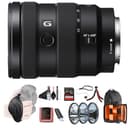
Sony E 16-55mm f/2.8 G

Sony E 16-55mm f/2.8 G

The one zoom to rule an APS-C kit. A constant f/2.8 across a 24-82mm equivalent range means it covers vlogging, portraits and everyday shooting without swapping lenses, and it is genuinely sharp corner to corner. Pricey, but it replaces two or three primes for run-and-gun video work.

Best do-it-all zoom
$1,698.00 · View on Amazon

Price as of July 28, 2026. #ad How we’re funded

2
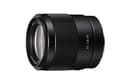
Sony FE 35mm f/1.8

Sony FE 35mm f/1.8

The most useful single prime for a hybrid creator. 35mm is wide enough for handheld vlogging and environmental shots, fast enough for low light, and the autofocus is quick and near-silent — unlike the cheaper 50mm f/1.8. On APS-C it becomes a natural ~52mm everyday lens.

Best all-round prime
$798.00 · View on Amazon

Price as of July 28, 2026. #ad How we’re funded

3
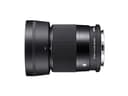
Sigma 30mm f/1.4 DC DN

Sigma 30mm f/1.4 DC DN

The default everyday prime for a Sony crop body like the ZV-E10 or a6400. A ~45mm equivalent field of view, a bright f/1.4 aperture for low light and blur, and a price that makes it a no-brainer first upgrade from the kit zoom.

Best value prime
$330.99 · View on Amazon

Price as of July 28, 2026. #ad How we’re funded

4
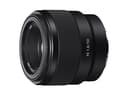
Sony FE 50mm f/1.8

Sony FE 50mm f/1.8

The cheapest way to get that blurred-background, low-light look on a Sony full-frame body. Optically it is a big jump over a kit zoom for the money — the honest caveat is the older, slower autofocus motor, which hunts and buzzes a little. For photos it is a bargain; for fast video AF, look higher up.

Best cheap blur
$198.00 · View on Amazon

$248.0020% off

Price as of July 28, 2026. #ad How we’re funded

The picks in full

#1Best do-it-all zoom

Sony E 16-55mm f/2.8 G

The one zoom to rule an APS-C kit. A constant f/2.8 across a 24-82mm equivalent range means it covers vlogging, portraits and everyday shooting without swapping lenses, and it is genuinely sharp corner to corner. Pricey, but it replaces two or three primes for run-and-gun video work.

Strengths

  • Constant f/2.8 across a versatile 24-82mm equivalent range
  • Sharp across the frame; G-series build quality
  • Fast, quiet autofocus for video

Trade-offs

  • Expensive — more than most crop bodies
  • No optical stabilization; heavier than a prime
Mount / formatSony E, APS-C
Focal length16-55mm (24-82mm equivalent)
Max apertureConstant f/2.8
Weight494 g

Specifications read from the manufacturer listing, on July 18, 2026.

#2Best all-round prime

Sony FE 35mm f/1.8

The most useful single prime for a hybrid creator. 35mm is wide enough for handheld vlogging and environmental shots, fast enough for low light, and the autofocus is quick and near-silent — unlike the cheaper 50mm f/1.8. On APS-C it becomes a natural ~52mm everyday lens.

Strengths

  • Fast, quiet autofocus that suits video and stills
  • 35mm is wide enough for arm's-length vlogging
  • Compact and light for its speed

Trade-offs

  • Costs more than the 50mm f/1.8
  • Not as much subject compression as an 85mm for portraits
Mount / formatSony E, full-frame
Focal length35mm (52mm on APS-C)
Max aperturef/1.8
Weight280 g

Specifications read from the manufacturer listing, on July 18, 2026.

#3Best value prime

Sigma 30mm f/1.4 DC DN

The default everyday prime for a Sony crop body like the ZV-E10 or a6400. A ~45mm equivalent field of view, a bright f/1.4 aperture for low light and blur, and a price that makes it a no-brainer first upgrade from the kit zoom.

Strengths

  • ~45mm equivalent — a natural, versatile field of view
  • Bright f/1.4 for low light and background blur
  • Excellent image quality for the money

Trade-offs

  • APS-C only
  • A little wide for tight headshot portraits
Mount / formatSony E, APS-C
Focal length30mm (45mm equivalent)
Max aperturef/1.4
Weight265 g

Specifications read from the manufacturer listing, on July 18, 2026.

#4Best cheap blur

Sony FE 50mm f/1.8

The cheapest way to get that blurred-background, low-light look on a Sony full-frame body. Optically it is a big jump over a kit zoom for the money — the honest caveat is the older, slower autofocus motor, which hunts and buzzes a little. For photos it is a bargain; for fast video AF, look higher up.

Strengths

  • Genuinely affordable route to f/1.8 background blur
  • Light and small; sharp stopped down a touch
  • The classic, versatile 50mm focal length

Trade-offs

  • Older DC autofocus motor is slow and audible
  • Not the pick if you rely on fast video autofocus
Mount / formatSony E, full-frame
Focal length50mm (75mm on APS-C)
Max aperturef/1.8
Weight186 g

Specifications read from the manufacturer listing, on July 18, 2026.

Zoom or primes for video?

A constant f/2.8 zoom is the most practical single lens for video: you reframe instantly, which matters when you can’t stop to swap lenses. The trade-off is that f/2.8 blurs the background less than a fast prime, and good zooms are expensive. Fast primes (f/1.8, f/1.4) give more blur and better low light for less money, but you commit to one focal length per shot.

Whatever you pick, autofocus and stabilization matter more for handheld video — check whether your camera has in-body stabilization in our camera guides, and consider a gimbal or tripod from our tripod guide for smoother footage.

Frequently asked questions

Is a zoom or a prime better for video?

A constant-aperture zoom is the most practical single lens for run-and-gun video because you can reframe without swapping lenses. Primes give more background blur and better low light for less money, at the cost of flexibility. Many creators carry one of each.

What is focus breathing and does it matter?

Focus breathing is the slight zoom effect that happens as a lens shifts focus. It's distracting in video, especially on focus pulls. Lenses designed with video in mind minimize it; it matters less for casual talking-head work than for narrative filmmaking.

Do I need a fast (low f-number) lens for video?

It helps for low light and for that cinematic blurred background, but modern cameras handle low light well, so it's not essential. A constant f/2.8 zoom is a great balance; f/1.8 primes go further on blur and dark scenes.

Will a photography lens work for video?

Yes — any autofocus lens works for video. The difference is that video-friendly lenses focus more quietly and smoothly with less breathing. An older lens with a noisy motor can be picked up by an on-camera mic.

Sources

Keep reading