Wide Open. Gear

The Best Cameras for YouTube

From your first upload to a channel that pays — the cameras that make YouTube video look good and grow with you.

By Stephen V.Last updated How we pick

A YouTube camera needs to do the boring things well: nail focus on your face without you thinking about it, let you see yourself while you record, shoot clean 4K, and take a decent external microphone. Cinema-grade specs matter far less than reliability — the camera that just works, take after take, is the one that helps you actually publish.

We’ve picked bodies across the range, from a value interchangeable-lens camera to full-frame options for when the channel becomes a job. The through-line is autofocus you can trust and a screen that flips forward. Whichever you choose, budget for a microphone before you upgrade the camera again — it’s the single biggest jump in how professional your videos feel.

How this is funded:we earn a commission if you buy through our links, at no extra cost to you. It never changes which product we recommend, and we’ll tell you plainly when to skip one. Full disclosure.

Quick picks

Ranked on published specs and buyer fit. Select a row to jump to the full write-up. We have not tested these products — here is exactly what we do instead.

#ProductBest forPrice
1
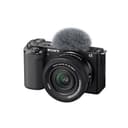
Sony ZV-E10

Sony ZV-E10

The interchangeable-lens vlogging camera most people should actually buy: a big APS-C sensor, a fully articulating screen, and Sony's E-mount so you can grow into better glass later. It skips a viewfinder and IBIS to hit its price, which is the right trade for a creator shooting off the screen.

Best overall for YouTube
$898.00 · View on Amazon

Price as of July 28, 2026. #ad How we’re funded

2
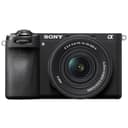
Sony a6700

Sony a6700

Sony's flagship APS-C body and the most future-proof crop-sensor camera for a serious creator: in-body stabilization, the AI autofocus from the full-frame line, and 4K60 from a 6K oversampled readout. If YouTube is a job rather than a hobby, this is the one to grow into.

Best for a serious channel
3
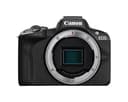
Canon EOS R50

Canon EOS R50

The friendliest beginner mirrorless camera going: Canon's excellent Dual Pixel autofocus, a genuinely helpful guided interface, and oversampled 4K30 in a body small enough to carry everywhere. It leans consumer — small grip, one slot — but it nails the thing beginners actually struggle with, which is focus.

Best for beginners
4
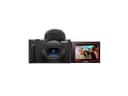
Sony ZV-1 II

Sony ZV-1 II

The most grab-and-go vlogging camera here: a wide 18-50mm equivalent zoom, a flip-out screen, and the best-in-class directional mic mean you can walk out the door and shoot talking-head video with no lens or mic to buy. The catch is the 1-inch sensor and no in-body stabilization.

Best all-in-one compact
$948.00 · View on Amazon

$1,049.9910% off

Price as of July 28, 2026. #ad How we’re funded

5
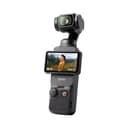
DJI Osmo Pocket 3

DJI Osmo Pocket 3

Not a traditional camera at all — a pocket gimbal with a 1-inch sensor bolted on — and that is exactly why it is the best walk-and-talk vlogging tool here. The 3-axis gimbal gives you glass-smooth motion no mirrorless body can match handheld, in something the size of a chunky pen.

Best for on-the-go
$438.00 · View on Amazon

$499.0012% off

Price as of July 28, 2026. #ad How we’re funded

The picks in full

#1Best overall for YouTube

Sony ZV-E10

The interchangeable-lens vlogging camera most people should actually buy: a big APS-C sensor, a fully articulating screen, and Sony's E-mount so you can grow into better glass later. It skips a viewfinder and IBIS to hit its price, which is the right trade for a creator shooting off the screen.

Strengths

  • APS-C sensor is a real low-light step up from any 1-inch compact
  • Fully articulating screen and creator-focused buttons
  • E-mount opens the door to the fast primes in our lens guides

Trade-offs

  • No viewfinder and no in-body stabilization
  • Rolling shutter shows up on fast pans
SensorAPS-C CMOS, 24.2 MP
MountSony E
Video4K30 (with crop), FHD up to 120p
StabilizationDigital only, no IBIS
Weight343 g with battery

Specifications read from the manufacturer listing, on July 18, 2026.

#2Best for a serious channel

Sony a6700

Sony's flagship APS-C body and the most future-proof crop-sensor camera for a serious creator: in-body stabilization, the AI autofocus from the full-frame line, and 4K60 from a 6K oversampled readout. If YouTube is a job rather than a hobby, this is the one to grow into.

Strengths

  • In-body stabilization — the only APS-C body here with it
  • AI-based subject recognition inherited from the a7 line
  • Oversampled 4K60 looks noticeably sharper than cropped 4K

Trade-offs

  • Priced close to entry full-frame bodies
  • Single card slot
SensorAPS-C CMOS, ~26 MP
MountSony E
Video4K60 (6K oversampled), 4K120 with crop
Stabilization5-axis in-body (IBIS)
Weight493 g with battery

Specifications read from the manufacturer listing, on July 18, 2026.

#3Best for beginners

Canon EOS R50

The friendliest beginner mirrorless camera going: Canon's excellent Dual Pixel autofocus, a genuinely helpful guided interface, and oversampled 4K30 in a body small enough to carry everywhere. It leans consumer — small grip, one slot — but it nails the thing beginners actually struggle with, which is focus.

Strengths

  • Dual Pixel autofocus is the easiest to trust at this price
  • Guided menu genuinely teaches as you shoot
  • Oversampled, uncropped 4K30

Trade-offs

  • Small grip and body feel toy-like with bigger lenses
  • No in-body stabilization; RF-S lens choice is still thin
SensorAPS-C CMOS, 24.2 MP
MountCanon RF
Video4K30 (oversampled, uncropped)
AutofocusDual Pixel CMOS AF II
Weight375 g with battery

Specifications read from the manufacturer listing, on July 18, 2026.

#4Best all-in-one compact

Sony ZV-1 II

The most grab-and-go vlogging camera here: a wide 18-50mm equivalent zoom, a flip-out screen, and the best-in-class directional mic mean you can walk out the door and shoot talking-head video with no lens or mic to buy. The catch is the 1-inch sensor and no in-body stabilization.

Strengths

  • Wider 18-50mm equivalent lens fits your face in an arm's-length selfie shot
  • Built-in directional 3-capsule mic and included windscreen are genuinely usable
  • Product-showcase and background-blur buttons are made for talking-to-camera

Trade-offs

  • 1-inch sensor trails APS-C rivals in low light
  • No in-body stabilization, so walking footage needs the digital crop
Sensor1-inch stacked CMOS, 20.1 MP
LensFixed 18-50mm equivalent f/1.8-4 zoom
Video4K30, FHD up to 120p
StabilizationDigital (Active) only, no IBIS
Weight292 g with battery

Specifications read from the manufacturer listing, on July 18, 2026.

#5Best for on-the-go

DJI Osmo Pocket 3

Not a traditional camera at all — a pocket gimbal with a 1-inch sensor bolted on — and that is exactly why it is the best walk-and-talk vlogging tool here. The 3-axis gimbal gives you glass-smooth motion no mirrorless body can match handheld, in something the size of a chunky pen.

Strengths

  • Mechanical 3-axis gimbal — smoother than any in-body system
  • Large 1-inch sensor for a pocket device; 4K120 slow-mo
  • Face tracking spins the camera to keep you centered

Trade-offs

  • Fixed lens and a tiny screen
  • Short battery life; wind noise needs the add-on mic or windscreen
Sensor1-inch CMOS
Stabilization3-axis mechanical gimbal
Video4K120, up to 4K60 normal
Form factorPocket handheld gimbal camera
Weight179 g

Specifications read from the manufacturer listing, on July 18, 2026.

The three upgrades that matter most for YouTube

First, audio. A camera looks 4K but your phone’s built-in mic sounds terrible — fix that with a proper mic from our YouTube mic guide. Second, lighting: a ring light or key light transforms a dim room. Third, a lens: a fast prime from our lens guides gives you that soft, professional background blur.

If you already own a decent camera, you don’t need a new one to look better on YouTube — you need those three things. Spend there first.

Frequently asked questions

Do I need 4K for YouTube?

Not strictly — most viewers watch on phones where 1080p looks great — but shooting 4K lets you crop and reframe in editing and future-proofs your footage. Every camera here shoots 4K, so it's not a deciding factor.

What's the best budget camera for starting a YouTube channel?

The Sony ZV-E10 and Canon R50 are the value sweet spot: real APS-C sensors, flip screens and strong autofocus for a sensible price. If you want an all-in-one with a lens and mic built in, the Sony ZV-1 II compact is the simplest start.

Is a webcam enough, or do I need a real camera?

For desk-based talking-head or streaming, a good webcam plus lighting can look excellent — see our best webcams guide. A real camera pulls ahead for background blur, low light and B-roll, which is why growing channels tend to move up.

Which camera has the best autofocus for talking-head video?

Sony's eye-tracking autofocus is the benchmark, and the a6700 adds AI subject recognition. Canon's Dual Pixel AF on the R50 and R10 is also excellent and very beginner-friendly.

Should I buy a camera or upgrade my audio and lighting first?

If your current camera shoots decent 1080p or 4K, upgrade audio and lighting first — they make a far bigger difference to how professional your videos look and cost far less than a new camera.

Sources

Keep reading