Wide Open. Gear

The Best Budget Microphones

The cheapest microphones that still sound genuinely good — one honest pick for each way you record, so you fix your audio without overspending.

By Stephen V.Last updated How we pick

Bad audio is the fastest way to lose a viewer — people forgive rough video long before they forgive sound that echoes, hisses or buzzes. The good news is that fixing it is cheap. You do not need a studio; you need the right small microphone for the way you record, and every pick here costs less than a night out.

The mistake budget buyers make is picking a type before a use. A desktop USB mic is wasted if you film outdoors; a clip-on wireless is wasted if you sit at a desk. So rather than rank one “best cheap mic,” we give you the honest budget pick for each situation: on-camera for talking to the lens, wireless for moving around, a wired lavalier for a single presenter, and a USB mic for a desk. Pick the row that matches how you shoot. Every pick shows a live Amazon price, and none of them is a compromise you’ll hear.

We haven’t tested these in a lab — we compile the published specs and reason from them, and we say exactly what we do on our methodology page. When your budget grows, our main microphone guide covers the step up.

How this is funded:we earn a commission if you buy through our links, at no extra cost to you. It never changes which product we recommend, and we’ll tell you plainly when to skip one. Full disclosure.

Quick picks

Ranked on published specs and buyer fit. Select a row to jump to the full write-up. We have not tested these products — here is exactly what we do instead.

#ProductBest forPrice
1
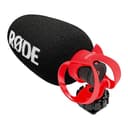
RODE VideoMicro II

RODE VideoMicro II

The tiny, cheap on-camera mic for when size matters most. It is smaller and lighter than the GO II and includes a furry windshield, so it disappears on top of a compact camera. You give up the USB output and some directionality — but for the price it is a huge upgrade over a built-in mic.

Best budget on-camera
$79.00 · View on Amazon

$89.0011% off

Price as of July 30, 2026. #ad How we’re funded

2
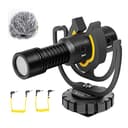
Deity V-Mic D4 Mini

Deity V-Mic D4 Mini

The value on-camera shotgun. It draws power straight from the camera's mic jack — no battery to forget — and delivers clean, directional sound for less than most rivals. A strong wind rating makes it a sensible cheap upgrade for outdoor talking-to-camera on a mirrorless or phone.

Cheapest capable shotgun
$49.95 · View on Amazon

Price as of July 30, 2026. #ad How we’re funded

3
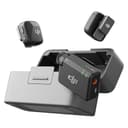
DJI Mic Mini (2 TX + RX)

DJI Mic Mini (2 TX + RX)

The wireless mic to buy if invisibility and price matter more than pro features. It is tiny — genuinely hard to spot clipped on a collar — with huge battery life and clean audio, for well under the Mic 2. You lose 32-bit float and some range, but for talking-head and interviews it is plenty.

Best budget wireless
$79.00 · View on Amazon

$99.0020% off

Price as of July 30, 2026. #ad How we’re funded

4
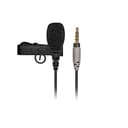
RODE smartLav+

RODE smartLav+

The cheapest way to get broadcast-style lavalier sound, if you don't mind a cable. It is a proper wired lav that plugs into a phone's headphone jack (or an adapter), so a single presenter gets clean, close, consistent audio for very little. Wired means no batteries and no dropouts.

Best budget lavalier
$62.87 · View on Amazon

Price as of July 30, 2026. #ad How we’re funded

5
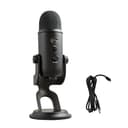
Blue Yeti USB Microphone

Blue Yeti USB Microphone

The USB mic everyone knows, and still a fair pick for its price and its four pickup patterns. The catch is that it is a sensitive condenser that hears everything — keyboard, room, the street. In a quiet space it sounds great; in a noisy one, a dynamic mic like the Shure MV7 will treat you better.

Best budget desktop USB
$109.99 · View on Amazon

$139.9921% off

Price as of July 30, 2026. #ad How we’re funded

The picks in full

#1Best budget on-camera

RODE VideoMicro II

The tiny, cheap on-camera mic for when size matters most. It is smaller and lighter than the GO II and includes a furry windshield, so it disappears on top of a compact camera. You give up the USB output and some directionality — but for the price it is a huge upgrade over a built-in mic.

Strengths

  • Extremely small and light; includes a furry windshield
  • No battery required
  • Big step up from any built-in camera mic

Trade-offs

  • 3.5mm only — no USB output
  • Less directional reach than a full shotgun
TypeCompact on-camera microphone
Output3.5mm TRS
PowerCamera (no battery)
Weight39 g

Specifications read from the manufacturer listing, on July 18, 2026.

#2Cheapest capable shotgun

Deity V-Mic D4 Mini

The value on-camera shotgun. It draws power straight from the camera's mic jack — no battery to forget — and delivers clean, directional sound for less than most rivals. A strong wind rating makes it a sensible cheap upgrade for outdoor talking-to-camera on a mirrorless or phone.

Strengths

  • Powered by the camera — no battery to charge or forget
  • Good wind rejection for the price
  • Very affordable for a directional shotgun

Trade-offs

  • No headphone monitoring or USB output
  • Needs a device that supplies plug-in power
TypeOn-camera shotgun (condenser)
Output3.5mm TRS/TRRS
PowerPlug-in power from camera (1-5V)
PatternSupercardioid

Specifications read from the manufacturer listing, on July 18, 2026.

#3Best budget wireless

DJI Mic Mini (2 TX + RX)

The wireless mic to buy if invisibility and price matter more than pro features. It is tiny — genuinely hard to spot clipped on a collar — with huge battery life and clean audio, for well under the Mic 2. You lose 32-bit float and some range, but for talking-head and interviews it is plenty.

Strengths

  • Extremely small and light — nearly invisible on camera
  • Long battery life and simple, reliable operation
  • Well under the price of the Mic 2

Trade-offs

  • No 32-bit float; shorter range than the Mic 2
  • No onboard recording backup
TypeWireless clip-on system
Transmitters2 included, with charging case
BatteryUp to ~48h with the case
ConnectionCamera, USB-C, Bluetooth

Specifications read from the manufacturer listing, on July 18, 2026.

#4Best budget lavalier

RODE smartLav+

The cheapest way to get broadcast-style lavalier sound, if you don't mind a cable. It is a proper wired lav that plugs into a phone's headphone jack (or an adapter), so a single presenter gets clean, close, consistent audio for very little. Wired means no batteries and no dropouts.

Strengths

  • Genuine broadcast-style lavalier sound for very little
  • Wired — no batteries, no interference, no dropouts
  • Includes a windshield and mount clip

Trade-offs

  • Cable tethers you; needs an adapter for many devices
  • One presenter only per mic
TypeWired lavalier (omnidirectional)
ConnectionTRRS (3.5mm), phone-compatible
PowerNone required (wired)
IncludesWindshield, mount clip, pouch

Specifications read from the manufacturer listing, on July 18, 2026.

#5Best budget desktop USB

Blue Yeti USB Microphone

The USB mic everyone knows, and still a fair pick for its price and its four pickup patterns. The catch is that it is a sensitive condenser that hears everything — keyboard, room, the street. In a quiet space it sounds great; in a noisy one, a dynamic mic like the Shure MV7 will treat you better.

Strengths

  • Four pickup patterns for solo, duet or room recording
  • Plug-and-play with on-mic gain, mute and monitoring
  • Widely supported and often discounted

Trade-offs

  • Sensitive condenser picks up room and keyboard noise
  • Large and heavy on its included stand
TypeUSB condenser
PatternsCardioid, omni, bidirectional, stereo
MonitoringBuilt-in headphone output
ConnectionUSB

Specifications read from the manufacturer listing, on July 18, 2026.

How to pick a budget microphone

Match the mic to where the sound happens. On-camera shotgun mics— the RODE VideoMicro II and Deity V-Mic D4 Mini — sit on top of your camera and point at whatever it points at, rejecting some of the room around it. They’re the simplest upgrade for talking-to-camera and B-roll, they need no battery, and they cost very little. If most of your filming is you in front of a camera, start here.

If you move around— walking, presenting, interviewing — a clip-on wireless like the DJI Mic Mini keeps the microphone on youinstead of on the camera, which is the single biggest jump in clarity for run-and-gun video. For a single seated presenter on a tight budget, a wired lavalier like the RODE smartLav+ gives clean, close, broadcast-style sound for even less, as long as you don’t mind a cable. And if you record at a desk— voiceover, podcasting, streaming — a USB mic like the Blue Yeti plugs straight into a computer and sounds great in a reasonably quiet room.

One honest caveat that applies to every cheap condenser and USB mic: they hear the room. Record somewhere soft (carpet, curtains, not a tiled kitchen), get the mic close to your mouth, and you’ll get most of the way to expensive-sounding audio for pocket money. When you outgrow these, our USB microphone guide and wireless mic guide cover the next step up.

Frequently asked questions

What's the cheapest microphone that actually sounds good?

For talking to a camera, a compact on-camera shotgun like the RODE VideoMicro II or Deity V-Mic D4 Mini is a huge upgrade over any built-in mic for very little money, and neither needs a battery. For a desk, the Blue Yeti is the classic cheap USB pick. The 'best' one depends entirely on how you record — match the type to the situation.

Do I need an expensive microphone to sound professional?

No. Most of what makes audio sound professional is getting the mic close to your mouth and recording in a room that isn't echoey — both free. A budget mic used well beats an expensive mic used badly. Spend on the right type for your setup, then focus on placement and a soft-sounding room.

On-camera mic or wireless mic on a budget?

If you film yourself in front of the camera, an on-camera shotgun is simpler and cheaper. If you move around, present, or interview someone a few feet away, a budget wireless like the DJI Mic Mini keeps the microphone on the person and sounds dramatically clearer than a camera-mounted mic at a distance.

Is a USB microphone or an on-camera microphone better for a beginner?

It depends where you record. A USB microphone is best for desk-based work — voiceover, podcasting, streaming — because it plugs straight into a computer with no extra gear. An on-camera microphone is best for filming video away from a desk. Pick by your main use; both are cheap enough that many creators eventually own one of each.

Why does my cheap microphone still sound echoey?

That's the room, not the mic. Condenser and USB microphones pick up reflections off hard surfaces. Record in a room with soft furnishings, move closer to the mic, and add a cheap pop filter or foam windscreen. These changes cost little and fix the most common complaint about budget audio.

Sources

Keep reading