Wide Open. Gear

The Best Cameras for Travel

The cameras worth the space in your bag — small enough to carry all day, capable enough to bring the trip home properly, matched to how you like to shoot.

By Stephen V.Last updated How we pick

The best travel camera is the one you’ll actually carry. A brilliant camera left in the hotel because it’s too heavy takes no photos at all — so for travel, size and weight aren’t a compromise you tolerate, they’re a feature you buy on purpose. The trick is finding the smallest camera that still does justice to the places you go.

We judge these on four things. Size and weight first, because it decides whether the camera comes with you. Then versatility— one body that handles a sweeping landscape, a dim restaurant and a walk-and-talk clip beats three specialists you have to swap. Image quality for the bulk — a bigger sensor is better, but only if you’re willing to carry it. And battery and simplicity, because the last thing you want on a trip is menus and a dead battery. Below we split the picks by how you like to travel, from a shirt-pocket compact to an APS-C body with a viewfinder, plus a gimbal camera for video and a drone that slips under the weight line that keeps travel simple.

Every pick shows a live Amazon price and a buy button. We haven’t physically tested these bodies — we say so, and explain exactly what we do instead on our methodology page.

How this is funded:we earn a commission if you buy through our links, at no extra cost to you. It never changes which product we recommend, and we’ll tell you plainly when to skip one. Full disclosure.

Quick picks

Ranked on published specs and buyer fit. Select a row to jump to the full write-up. We have not tested these products — here is exactly what we do instead.

#ProductBest forPrice
1
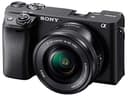
Sony a6400

Sony a6400

A durable all-rounder that has aged well thanks to genuinely sticky autofocus and a proper viewfinder. It is the pick if you want stills as much as video and don't need in-body stabilization — the eye AF still tracks a moving subject better than a lot of newer, cheaper bodies.

Best overall
$826.70 · View on Amazon

$999.9917% off

Price as of July 30, 2026. #ad How we’re funded

2
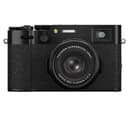
Fujifilm X100VI

Fujifilm X100VI

The camera everyone wants and few can find in stock. A fixed 35mm-equivalent lens, a gorgeous hybrid viewfinder, in-body stabilization and 40 megapixels make it a superb everyday and street camera — just know it is a deliberate, one-focal-length tool, not a do-everything body, and it sells above list.

Best for image quality
$2,019.00 · View on Amazon

$2,298.9912% off

Price as of July 30, 2026. #ad How we’re funded

3
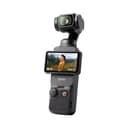
DJI Osmo Pocket 3

DJI Osmo Pocket 3

Not a traditional camera at all — a pocket gimbal with a 1-inch sensor bolted on — and that is exactly why it is the best walk-and-talk vlogging tool here. The 3-axis gimbal gives you glass-smooth motion no mirrorless body can match handheld, in something the size of a chunky pen.

Best for video
$438.00 · View on Amazon

$499.0012% off

Price as of July 30, 2026. #ad How we’re funded

4
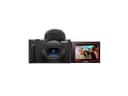
Sony ZV-1 II

Sony ZV-1 II

The most grab-and-go vlogging camera here: a wide 18-50mm equivalent zoom, a flip-out screen, and the best-in-class directional mic mean you can walk out the door and shoot talking-head video with no lens or mic to buy. The catch is the 1-inch sensor and no in-body stabilization.

Best pocket compact
$948.00 · View on Amazon

$1,049.9910% off

Price as of July 30, 2026. #ad How we’re funded

5
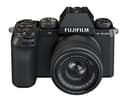
Fujifilm X-S20

Fujifilm X-S20

Fujifilm's content-creator body: in-body stabilization, a fully articulating screen, big battery life and a dedicated Vlog mode, plus the film-simulation colors. It is one of the few sub-flagship cameras that is genuinely strong for both stills and run-and-gun video.

Best for stills and video
$1,599.00 · View on Amazon

Price as of July 30, 2026. #ad How we’re funded

6
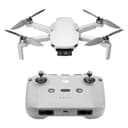
DJI Mini 4K

DJI Mini 4K

The easiest way into aerial video, and it stays under the 249 g line that keeps registration simple for most hobby fliers in the US. A 3-axis gimbal and stable 4K make it far more capable than the price suggests — the honest entry point before you spend real money on a drone.

Best for aerial shots
$229.00 · View on Amazon

$299.0023% off

Price as of July 30, 2026. #ad How we’re funded

The picks in full

#1Best overall

Sony a6400

A durable all-rounder that has aged well thanks to genuinely sticky autofocus and a proper viewfinder. It is the pick if you want stills as much as video and don't need in-body stabilization — the eye AF still tracks a moving subject better than a lot of newer, cheaper bodies.

Strengths

  • Real-time Eye AF that still holds up years later
  • Built-in electronic viewfinder for shooting in bright sun
  • Weather-sealed against dust and moisture

Trade-offs

  • No in-body stabilization
  • Menus are the older, denser Sony layout
SensorAPS-C CMOS, 24.2 MP
MountSony E
Video4K30 (oversampled)
Viewfinder2.36M-dot EVF
Weight403 g with battery

Specifications read from the manufacturer listing, on July 18, 2026.

#2Best for image quality

Fujifilm X100VI

The camera everyone wants and few can find in stock. A fixed 35mm-equivalent lens, a gorgeous hybrid viewfinder, in-body stabilization and 40 megapixels make it a superb everyday and street camera — just know it is a deliberate, one-focal-length tool, not a do-everything body, and it sells above list.

Strengths

  • 40 MP sensor with in-body stabilization
  • Unique optical/electronic hybrid viewfinder
  • Pocketable, beautifully built, film-simulation color

Trade-offs

  • Fixed 35mm-equivalent lens only — no zoom, no swapping
  • Chronically out of stock and sold above list price
SensorAPS-C X-Trans CMOS 5 HR, 40 MP
LensFixed 23mm f/2 (35mm equivalent)
Video6.2K30, 4K60
Stabilization5-axis in-body (IBIS)
Weight521 g with battery

Specifications read from the manufacturer listing, on July 18, 2026.

#3Best for video

DJI Osmo Pocket 3

Not a traditional camera at all — a pocket gimbal with a 1-inch sensor bolted on — and that is exactly why it is the best walk-and-talk vlogging tool here. The 3-axis gimbal gives you glass-smooth motion no mirrorless body can match handheld, in something the size of a chunky pen.

Strengths

  • Mechanical 3-axis gimbal — smoother than any in-body system
  • Large 1-inch sensor for a pocket device; 4K120 slow-mo
  • Face tracking spins the camera to keep you centered

Trade-offs

  • Fixed lens and a tiny screen
  • Short battery life; wind noise needs the add-on mic or windscreen
Sensor1-inch CMOS
Stabilization3-axis mechanical gimbal
Video4K120, up to 4K60 normal
Form factorPocket handheld gimbal camera
Weight179 g

Specifications read from the manufacturer listing, on July 18, 2026.

#4Best pocket compact

Sony ZV-1 II

The most grab-and-go vlogging camera here: a wide 18-50mm equivalent zoom, a flip-out screen, and the best-in-class directional mic mean you can walk out the door and shoot talking-head video with no lens or mic to buy. The catch is the 1-inch sensor and no in-body stabilization.

Strengths

  • Wider 18-50mm equivalent lens fits your face in an arm's-length selfie shot
  • Built-in directional 3-capsule mic and included windscreen are genuinely usable
  • Product-showcase and background-blur buttons are made for talking-to-camera

Trade-offs

  • 1-inch sensor trails APS-C rivals in low light
  • No in-body stabilization, so walking footage needs the digital crop
Sensor1-inch stacked CMOS, 20.1 MP
LensFixed 18-50mm equivalent f/1.8-4 zoom
Video4K30, FHD up to 120p
StabilizationDigital (Active) only, no IBIS
Weight292 g with battery

Specifications read from the manufacturer listing, on July 18, 2026.

#5Best for stills and video

Fujifilm X-S20

Fujifilm's content-creator body: in-body stabilization, a fully articulating screen, big battery life and a dedicated Vlog mode, plus the film-simulation colors. It is one of the few sub-flagship cameras that is genuinely strong for both stills and run-and-gun video.

Strengths

  • In-body stabilization and a fully articulating screen
  • Standout battery life for a mirrorless body
  • 6.2K30 and 4K60 with Fujifilm color science

Trade-offs

  • Priced against APS-C flagships and entry full-frame
  • Single card slot
SensorAPS-C X-Trans CMOS 4, ~26 MP
MountFujifilm X
Video6.2K30, 4K60
Stabilization5-axis in-body (IBIS)
Weight491 g with battery

Specifications read from the manufacturer listing, on July 18, 2026.

#6Best for aerial shots

DJI Mini 4K

The easiest way into aerial video, and it stays under the 249 g line that keeps registration simple for most hobby fliers in the US. A 3-axis gimbal and stable 4K make it far more capable than the price suggests — the honest entry point before you spend real money on a drone.

Strengths

  • Under 249 g, so it dodges the heavier registration rules for hobby use
  • 3-axis mechanical gimbal for genuinely smooth 4K
  • Long transmission range and beginner-friendly flight modes

Trade-offs

  • Smaller sensor than the pricier Mini 3/4 Pro
  • No obstacle avoidance
Camera1/2.3-inch sensor, 4K UHD
Stabilization3-axis mechanical gimbal
WeightUnder 249 g
Max flightUp to ~31 min per battery

Specifications read from the manufacturer listing, on July 18, 2026.

How to choose a travel camera

Start with an honest question: how much are you willing to carry? If the answer is “as little as possible,” a pocket compact like the Sony ZV-1 II or a gimbal camera like the Osmo Pocket 3 will get used far more than a bag full of lenses ever would. If you want proper photos and don’t mind a small shoulder bag, an APS-C body with a single versatile lens is the sweet spot — big sensor, small footprint.

Think about a viewfinder, too. Bright sun on a beach or a mountain trail washes out a rear screen, and a viewfinder lets you compose anyway — which is why the a6400 and X100VI earn their place for stills-first travelers. For video-led trips, a flip screen and stabilization matter more, and the Osmo Pocket 3’s built-in gimbal does something no mirrorless body can match handheld. If you want aerial shots, weight is the deciding factor: the DJI Mini 4K stays under 249 g, which keeps registration simple for most recreational fliers in the US — see our drones guide for the full range and the rules.

Whatever you pick, pack light on everything else. One versatile lens beats three, a spare battery matters more than a second body, and a small bag that doesn’t scream “expensive camera” keeps your kit safer — our camera bags guidehas slings and backpacks built for exactly this. If you’re still choosing between systems, start with what camera should I buy.

Frequently asked questions

Is a compact camera good enough for travel, or do I need interchangeable lenses?

For most travelers, a good compact or a single-lens setup is plenty. A 1-inch compact like the Sony ZV-1 II shoots beautifully in daylight and slips in a pocket; an APS-C body with one versatile lens gives you better low light and a viewfinder for a bit more bulk. Only bring multiple lenses if a specific kind of shot — wildlife, say — demands it.

Do I need a viewfinder on a travel camera?

It helps a lot in bright outdoor light, where a rear screen washes out and you can't see your composition. The Sony a6400 and Fujifilm X100VI have one; the compacts and the Osmo Pocket 3 rely on their screens, which is fine if you mostly shoot in shade or shoot video off the screen anyway.

What's the best travel camera for video and vlogging?

The DJI Osmo Pocket 3 is the standout for travel video: its built-in 3-axis gimbal gives glass-smooth walking footage in something the size of a chunky pen. If you want one camera for both photos and video, the Fujifilm X-S20 adds in-body stabilization and a flip screen.

Can I bring a drone when I travel?

Often yes, but check the rules for your destination before you fly — they vary by country and by location. In the US, a sub-250g drone like the DJI Mini 4K flown recreationally avoids the heavier registration rules, which is a big part of why the mini drones sit just under that weight line. Always check local restrictions, no-fly zones and airline battery rules.

Should I just use my phone for travel photos?

Phones are excellent in good light and always with you. A dedicated camera pulls ahead in low light, at a distance (real zoom or a fast lens), for background blur, and for stabilized video — which is exactly where travel memories tend to live. If those matter to you, a small camera is worth the bag space.

Sources

Keep reading