How to choose a compact camera
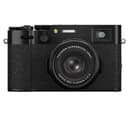
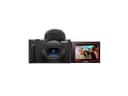
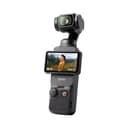
Start with the sensor, because it’s what separates a real camera from a phone. The Fujifilm X100VI has a large APS-C sensor — the same size found in many interchangeable-lens cameras — which is why its image quality, low-light performance and background blur are in a different league. The Sony ZV-1 II and DJI Osmo Pocket 3 use smaller 1-inch sensors, still far bigger than a phone’s and plenty for travel and video, but a clear step below the X100VI for outright quality.
Then decide what you need from the lens, since you can’t change it. The X100VI has a fixed 35mm-equivalent prime— one focal length, wonderful for street, travel and everyday photos, but it doesn’t zoom, so you move your feet. The ZV-1 II has a wide-to-short-tele zoomthat’s more flexible and wide enough to fit your face in an arm’s-length selfie, which is why it doubles as a vlogging camera. The Osmo Pocket 3 isn’t a traditional camera at all — it’s a pocket gimbal with a 1-inch sensor bolted on, so it gives you glass-smooth motion no other camera here can match handheld.
Finally, match the camera to the job. For the best photos in the smallest serious camera, and a viewfinder to shoot with in bright sun, the X100VI is the one people obsess over — just know it sells above list and is often out of stock. For a genuine do-everything pocket camera that shoots good stills and vlogs, the ZV-1 II is the sensible all-rounder. For travel and walk-and-talk video where smooth motion matters most, the Osmo Pocket 3 wins. Whichever you choose, a good microphone does more for video than any sensor upgrade, and our travel photography tips will get more out of whatever you carry.
A note on other compacts
Two names come up a lot that we haven’t featured as priced picks. The Canon PowerShot G7 X Mark IIIis a classic 1-inch pocket zoom that many YouTubers grew up on, but stock is thin and it often sells at a premium — check its live price against the ZV-1 II, which usually does more for the money. And a GoProor similar action camera is the pick if you want something waterproof and crash-proof for POV and sports rather than a general-purpose compact. If you think you’ll want to swap lenses later, a small interchangeable-lens body from our travel cameras or beginner mirrorlessguides is the better long-term buy — you give up a little pocketability for a lot more room to grow.