How to choose your first prime
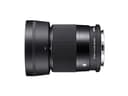
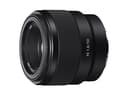
First, match the mount. A lens must be made for your camera’s system — Sony E, Canon RF, Fujifilm X, Nikon Z and so on — and on top of that, some primes are built for smaller APS-C sensors while others cover full-frame. Our APS-C picks here (the Sigma 30mm and 56mm) are the affordable, compact choice for crop-sensor bodies; the Sony FE and Canon RF primes are full-frame lenses that also work on their brand’s crop bodies with a tighter effective field of view. If you’re unsure what your camera takes, our lens mounts explained guide sorts it out.
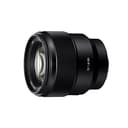
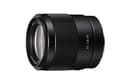
Then pick a focal length for what you shoot. A 35mm(or ~30mm on APS-C) is a natural, everyday length — great for street, travel, environmental portraits and video. A 50mmis the classic “nifty fifty”: cheap, sharp, and a brilliant first prime that gets you beautiful subject separation for very little money. An 85mm(or ~56mm on APS-C) is the portrait specialist — the longer length and wide aperture flatter faces and blur backgrounds into cream. Our focal length guide covers how each length changes your images if you want the full picture.
Finally, weigh aperture against budget. The f/1.4 primes here (the Sigma pair) gather more light and blur backgrounds more aggressively than the f/1.8 options, which helps in low light and for the most dramatic separation — but the f/1.8 lenses are lighter, cheaper and still a massive step up from any kit zoom. For most people the honest advice is to buy the affordable f/1.8 fifty first, learn what a prime does for your photos, and add a portrait prime later. And whatever you buy, a prime outlives your camera body — good glass keeps its value and moves to your next body, which is why spending on lenses is the smarter long-term play. Our camera vs lens upgrade guide makes that case in full.